Old roofs lug the sort of authority you can not phony. Slate that works out with age, clay ceramic tiles that toss a warm darkness in late mid-day, standing-seam frying pans that still ring when you knock them with a knuckle. When wintertime arrives, all that personality satisfies gravity. Snow and ice slide with exceptional force, and without a thoughtful snow retention approach, they shear rain gutters, break finials, crush landscaping, and, worst of all, intimidate people listed below. The right snow guard system, sized and outlined for the structure and the environment, is the difference in between an elegant thaw and a disastrous avalanche.
Material option sits at the facility of that choice, particularly for heritage structures. Copper, steel, and bronze each bring distinct toughness in toughness, patina, and compatibility with historical fabric. I have actually mounted and specified all 3 on jobs from century-old churches to Adirondack lodges, and the pattern is constantly the very same: the most effective outcome originates from combining product to roof system, regional loading, and the building's story. It is not a finish decision, it is a performance decision that occurs to reside in ordinary sight.
What snow guards do on a heritage roof
A snow guard, whether a little private cleat or a continual bar, offers a simple function: keep snow and ice from moving simultaneously. On slate and ceramic tile, where rubbing is reduced, the risk is a sheet that lets go after a warm day, after that re-freezes and drops in the evening. Steel roof coverings act in a similar way, in some cases even worse, because smooth frying pans urge long-run slides. The loads are not academic. On a 40-foot run of roof in Vermont with 30 extra pounds per square foot of snow, the kept energy at the eave can surpass what several fascia assemblies or rain gutters were ever before created to hold. You do not presume with those pressures, you calculate and test.
On heritage properties, a 2nd purpose issues similarly: aesthetic integration. Stonework cornices, lead-coated copper valleys, hand-dressed slate training courses, and personalized cupolas bring an aesthetic logic. Any type of intervention has to read as if it belonged there from the beginning. A good snow guard system is the unusual piece of safety and security equipment that can likewise strengthen the architectural story.
Bar, pad, and crossbreed systems
Before entering into steels, it aids to fix terms. Pad-style guards, occasionally called cleats, are specific systems attached to each slate or tile with a hook or strap, after that flashed into the course over. Bar systems run flat along the roofing, affixing to rafters or joints at a routine spacing. Crossbreed systems, like pipe-and-seam clamps on standing-seam roofing systems, wed modular equipment to constant bars.
On long runs of smooth steel or heavy-snow websites, continual bars make sense. They spread load and create redundant restraint lines. On fragile slate, specifically where substitute slates are scarce, pad-style guards, utilized in quantity and startled up the incline, disperse pressure with much less leverage on any kind of single puck. Several heritage jobs wind up with a mix: very discreet pad guards higher on the field and a line or 2 of bar near the eave to lock the bottom course.
Now to the steels themselves.
Copper: the timeless companion for slate, lead-coated copper, and clay tile
If you ask a slater with grey at the temples for a one-word answer, you will probably listen to copper. It collaborates with the chemistry of slate and clay, it lasts longer than a lot of us, and it patinates into something that looks inevitable.
Copper's patina is greater than color. The oxide layer becomes its shield. On seaside tasks I have watched brand-new copper snow guards silence from brilliant cent to a polite brown-green in under 2 years, then hold for decades. On inland churches we have actually drawn 70-year-old guards that still seem like a bell when tapped. That service life, coupled with the capacity to solder, braze, or rivet assemblies tidily, makes copper the very first phone call when the roofing system is copper, slate, or tile.
A couple of practical notes from the field. Copper's strength in plate type is moderate compared to steel, so you design with deepness and account as opposed to brute density. A two-inch-upstand cleat with a folded hem behaves far better than a thin tab. Bolts have to be compatible. Stainless into copper is acceptable, however I prefer copper rivets or bronze screws when the substratum allows. Galvanized bolts are a nonstarter for corrosion factors. If you have lead-coated copper valleys and flashings, copper guards rest alongside them comfortably. On stone-trimmed cornices, a row of copper bar brackets can read like railings, not add-ons.
Color control is challenging. If you require an attire, pre-weathered appearance on day one, ask for manufacturing facility brownish or blackened copper finishes that hold through handling. Natural copper will never match existing 80-year-old frying pans on installation day. That mismatch normally bothers proprietors for 6 months, after that the elements do their job, and the whole roof covering pulls together.
Weight often turns up. A normal pad guard with band considers a couple of ounces. Also if you mount 500 on a large slate roof, you are adding tens of extra pounds, not hundreds, spread over countless square feet. To put it simply, for architectural calculations copper's self-weight is sound. The real lots to prepare for is the snow itself.
Where copper is not excellent gets on repainted steel roofing systems where the proprietor desires a crisp, color-matched system that reads modern-day, or on budget-sensitive jobs where the price delta throughout hundreds of units adds up. Copper market rates swings. On a historic collection we priced copper pad guards at about one and a half to 2 times the expense of similar repainted stainless units. The collection board chose copper anyway, because the gutters, finials, and custom leader boxes were copper and the entire structure mattered more than the line item.
Painted and stainless steel: precision, stamina, and color matching
You select steel when you need higher return strength in small sections, when you want a paint match to a standing-seam roofing system, or when the work demands the crispest possible geometry. Stainless-steel brings corrosion resistance, reduced maintenance, and a graceful profile. Carbon steel, hot-dip galvanized then powder layered, still works well in several areas, yet I have mainly migrated to stainless for lifespan and tranquility of mind.
On a hill lodge with 24-gauge steel standing joints, we defined a clamp-on bar system with stainless brackets and aluminum go across tubes finished in the very same color as the roof. The owner desired snow retention without visible jewelry. Steel, with its capability to take powder layer that actually matches a RAL chip, solved it. Copper would certainly have screamed. Bronze would certainly have said. The stainless braces likewise clutched the joints without piercing, which matters when vapor control and guarantees come into play.
Sustainability and efficiency converge here. Modern high-solids coatings withstand UV, liquid chalking, and abrasion. In cities, soot and acid rainfall do their worst on repainted metals. A Class 2 powder and a stainless substrate shrug it off for a lengthy window. In winter months, when snow slides, the paint finish under a bar system will see scuffing, but the guard takes the lots prior to the sheet pan does.
Watch your galvanic couples. Stainless brackets on bare aluminum bars can produce a battery in damp environments. Usage isolating pads, matched metals, or factory systems examined as a kit. In salt air, I stay clear of any type of mixed-metal improvisation unless every interface has a recognized barrier. And be skeptical of slim zinc electroplating on bolts coupled with stainless equipment. The little things rot first.
Steel's downside, visually, is that it seldom disappears on older textile unless you commit to that modern-day comparison. On a Romanesque church we brought back, a painted stainless bar near the eave battled the stone arches and lead pipes. We changed it with custom-made copper braces and a patinated tube, and instantly the cornice felt whole again.
Bronze: the quiet heavy player for sea air and stone
Bronze inhabits an unique specific niche. It is the metal I reach for when the website obeys salt or when the design leans timeless. The alloy family is broad, however silicon bronze hardware and naval bronze elements have a sturdiness and corrosion resistance that can last longer than also copper in damp, aquatic environments. The aging runs from rich brownish to much deeper chocolate with time, and unlike lacquered brass, it does not betray finger prints and scuffs.
Bronze is likewise stout. A bronze pad guard with a charitable backplate and strap can withstand the bar action of ice far better than a slim copper equivalent. On a cliffside estate in Maine, we made use of bronze cleats across the reduced third of a heavy-snow roof with cedar trim and stone smokeshafts. After two winters, the system showed only surface area burnishing. Copper would certainly have succeeded. Bronze looked like it had actually expanded there with the granite.
The compromises are expense and accessibility. You are spending for the alloy, the machining, and the smaller sized manufacturing quantities. Bronze parts are likewise larger than copper in comparable areas, which may matter when you ship countless pieces to a remote website. Aging matching can be an art. If you have existing bronze leader heads or customized finials that have gotten to a deep tone over decades, strategy time to pre-patinate brand-new guards and examination on mockups. A mismatch reveals more on bronze than on copper due to the fact that the brownish family has less chromatic forgiveness than the green.
Detailing issues more than brochure specs
Material is the headline, yet the silent details make a decision whether a snow guard system offers for fifty winters months or 6. On slate, I want a strap that hooks over the head of a slate two courses up, not a nail-on tab that bets the ranch on a solitary slate's resistance to pullout. On standing-seam, clamp torque have to be set continually, and joints have to be checked for oil canning and panel clip spacing. On floor tile, the saddle under a bar requires to spread out tons over the rib, not squash the pan.
We found out a tough lesson on a gallery annex with a curved copper roofing. The initial winter months, ice sneaked under the bar by capillary action, refroze, and lifted the entire lower row right into a mild smile. The fix was a hemmed snow fence profile that denied the ice a horizontal surface area, and a small pitch change that pressed thaw water to designated drains. The copper never ever grumbled. Our assumptions did.
Fasteners and substratums deserve their own paragraph. Historical decks are seldom uniform. You will certainly hit heart want, after that a nineteenth-century spot of chestnut, then a 1980s plywood repair work. Pilot openings and correct string choices keep the work from ending up being a forensic workout in the attic room later on. For bar systems, never trust just the deck. Discover rafters, then hit them all. If the rafter pattern is irregular as a result of past work, map it with a tiny scope from the interior first.
Flashing is not negotiable. On slate and floor tile, each penetration needs proper bib flashing, and straps must vanish under the program above. On steel, through-fastened systems want butyl or EPDM washers under a protective cap, and a redundant seal where possible. Warm cable televisions and snow guards can cohabit, however manage their communication. A warmth cable right behind a bar can develop a wet microclimate that increases corrosion on the wrong alloy pair.
Aesthetics, not as an afterthought
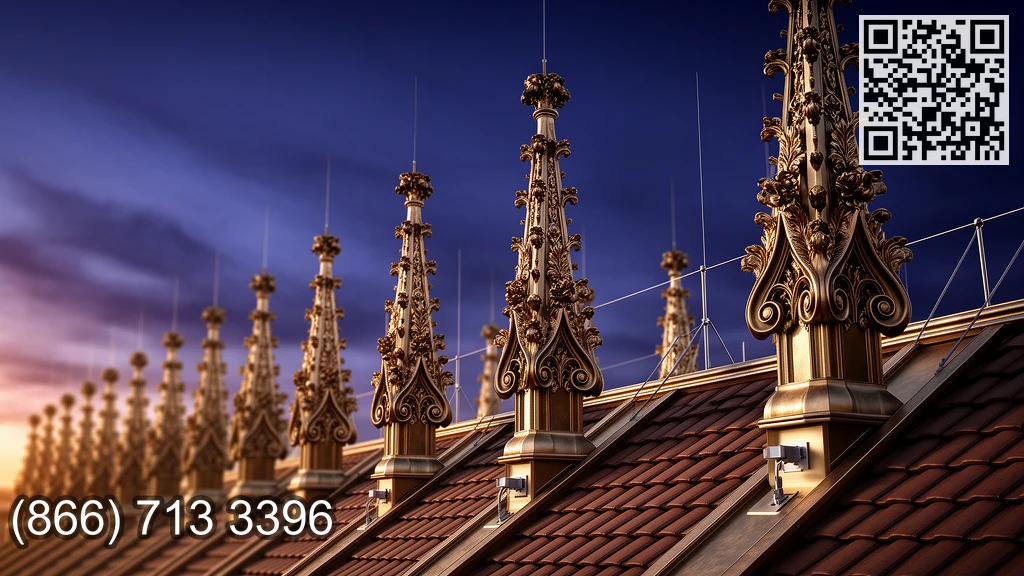
Snow guards line the eye in a manner you only see as soon as they are incorrect. On Beaux-Arts cornices, the rhythm of brackets should resemble the dentils or modillions. On farmhouse roofs, a single low bar near the eave can feel straightforward, while three lines in the area might look fussy. I take altitudes right into the lawn and stand at eviction where site visitors arrive. If the first read is an uniformly spaced picket fencing of guards, I go back within and decrease. Heritage structures are worthy of restraint.
Color is a device, not a crutch. On modern repainted steel roofings, matching the panel shade makes sense and streamlines. On slate, I have actually warmed up to the appearance of dark copper guards that read like darkness, not accessory. Bronze near limestone looks refined in such a way that painted metal never rather accomplishes. Where a structure already lugs Personalized Chimney Shrouds or Customized Roofing system Vents in copper, continuing that vocabulary throughout Personalized Snow Guards is not just meaningful, it is generous to the architecture.
There is room for joy, also. A small estate we finished added a set of custom-made cupolas and Customized Finials in rotated copper, with an area of snow cleats outlined to take the exact same soft grain. The owner called after a tornado to say the roofing system appeared like a winter season yard, not a threat. That type of comment informs you the metalwork signed up with the building's voice.
Performance by climate and roof covering system
Design modifications as you cross snow maps. In the mid-Atlantic, where snow is anecdotal and damp, a solitary eave bar and a scattering of pad guards up the area could be adequate. In the Mountain ranges or northern New England, I start my conversation at multiple rows, closer spacing, and durable attachment. On shallow pitches, snow lingers. On steep pitches, it wishes to dash. The steeper the slope, the extra you need to think of guards as a brake, not a barrier. The guard does not hold the whole hill. It chops it into manageable pieces.
On standing-seam roofs, clamp-on systems stay clear of passing through the panels and maintain service warranties intact. Try to find clamps checked for your seam account and scale. Light weight aluminum go across tubes decrease weight and take paint well. If the roof covering is copper, copper tubes maintain the galvanic table delighted, and bronze clamps are a defensible luxury in seaside air.
On clay floor tile, one of the most elegant systems saddle the ceramic tile account and tie back to the deck or batten without crushing the clay. Copper or bronze saddles rest pleasantly right here. Steel needs https://codykaxj733.iamarrows.com/snow-guard-strategies-custom-layouts-for-heritage-roof great covering and mindful sides, or you will see paint damages and rust halos where meltwater pools.
Slate is its very own language. I such as a staggered pattern of copper or bronze pad guards starting roughly two training courses over the eave, after that tipping every third or 4th training course depending upon slope and area. On huge areas, include a bar near the reduced third. If the slate is soft or already friable, quit and deal with the roof first. Snow guards are not a plaster for failing slate, they are a load path.
Integrating with other personalized metalwork
Heritage roofs rarely have a solitary steel element. They bring Custom Leader Boxes at the downspouts, Customized Dormers with their very own flashing dances, and occasionally a flourish of lightning defense air terminals. It pays to think about the snow guards not as a separated system but as one part of a coordinated suite.
If a job currently consists of new Custom-made Smokeshaft Shrouds or Custom Roofing Vents in copper from a trusted maker, straightening profiles and patina with the snow guards simplifies upkeep and syncs the visual field. On a court house restoration with Salvo Metal Works supplying the copper leader heads and decorative apexes, we sent them our snow guard accounts early. They returned a set of copper braces with the very same bead detail as the finial bases. When the scaffold came down, the roof covering check out like a solitary writer had written it.
Do not fail to remember drainage. Snow guards that do their job concentrate meltwater for longer at the eave. Ensure rain gutters, scuppers, and leader heads are sized as necessary. Personalized Leader Boxes are not only decorative, they take care of rises. Downspout heat cables and snow retention can collaborate to ensure that meltwater leaves easily instead of refreezing right into an expensive icicle sculpture.
Cost and lifecycle thinking, without illusions
Owners frequently request a fast rate delta between copper, stainless-steel, and bronze. The honest answer is that it varies with metal markets, element intricacy, and finish. As a basic guide from proposals over the last couple of years: painted stainless systems tend to land at the lower end, copper in the center to upper, bronze on top. On a medium slate roof requiring 300 to 600 pad guards, the spread can be a couple of thousand to 10s of hundreds of dollars. Labor usually controls anyhow, specifically on high or intricate roofs.
Where lifecycle enters the discussion is gain access to. If the building is high, urban, and needs road licenses and turn stages for any roofing job, the most inexpensive install today may not be the most inexpensive twenty-year choice. The per-piece premium for copper or bronze can go away if it stops a second mobilization to change falling short painted steel in a decade. On a rural barn roofing you can get to with a lift, the calculus shifts. There is no one right solution, only the discipline to run the real numbers for the site.
Maintenance deserves a line or more. Copper and bronze request little bit more than evaluation. Stainless-steel with top quality coatings behaves likewise. Colored carbon steel desires eyes on edges and touch-ups before rust success. On all systems, look for loosening from freeze-thaw cycles and check that bars have not end up being racks for debris. Leaf loads collect behind bars near trees, and detritus holds dampness. A half day of fall clean-up conserves a great deal of silent decay.
Common errors, and how to avoid them
I maintain a tiny listing from jobs we were contacted us to rescue. The initial mistake is under-sizing the system. Two bars at the eave of a long, high, north-facing roof in a high-snow area will refrain from doing it. Usage manufacturer calculators as a beginning factor, after that readjust with local experience. The second is blending incompatible steels for equipment and thinking the sealer will certainly maintain tranquility permanently. It will certainly not. Choose a metals system, after that maintain the family together.
Another frequent mistake is poor alignment with structure. Hitting just the deck with lengthy screws due to the fact that the rafters are elusive audios fine until the day the snow load examinations that optimism. Map structure and document it for the building document. Ultimately, do not allow snow guard placement disrupt solution accessibility to Custom-made Dormers or roof-mounted equipment. Absolutely nothing ruins a maintenance plan like a bar exactly where you need your body to be.
When to favor copper, steel, or bronze
A brief pairing guide can aid decision-making at the table:
- Choose copper when the roofing system is slate, clay floor tile, or copper, when you desire stylish aging, solderable detailing, and lengthy solution with marginal upkeep. It is the protagonist for lots of historical areas and sets well with copper Customized Finials, Customized Leader Boxes, and other copperwork. Choose stainless or repainted steel when the roofing system is repainted standing joint, when you need a shade suit and slim modern-day profiles, or when budget plan and crispness lean the project in this way. Usage tested clamp systems, and mind galvanic couples. Choose bronze when the building lives by salt air, when classic rock and wood gain from a deep brown aging, or when you need added durability in a product that reads heritage. Expect a costs and strategy patina tests.
Working with the appropriate maker and team
Snow retention rests at the intersection of roofing, metalwork, and structural judgment. Involve a roofer that recognizes the details material in play and a maker that will adjust accounts to your roofing, not vice versa. Shops like Salvo Metal Works, that reside in the custom-made world, fit equating an architectural intent into braces, bars, and cleats that match existing language. The result is not just safe, it is beautiful.
Mockups are worth their weight. A pair of sample guards mounted on the actual roof tells you extra in a week than a lots makings. View how water relocations, exactly how the color reads at different hours, just how the account captures light. Adjust spacing before you dedicate to hundreds of openings and bands. On multi-trade websites, assign clear possession of sequencing. Snow guards require to land after the roofing is limited however prior to the scaffold vanishes, and in concert with any kind of Customized Roofing Vents or Personalized Chimney Shrouds that share the field.
A winter months roof that looks as good as it performs
Heritage buildings ask for craft, not simply conformity. Copper, steel, and bronze all have a place in a thoughtful snow retention method, and the difference in between a competent job and a wonderful one lies in small choices duplicated roof-wide. If you reward the design, select the metal that values it, detail the attachments as if the very first storm is watching, and allow time do what it does best to good metalwork. When the thaw comes and the slate remains silent, you will recognize you responded to winter season with the ideal voice.