Chimneys are keystones of a roofline, silent signifiers of craft and permanence. On historic estates and carefully built townhomes, they do greater than air vent flues, they tell a period, specify symmetry, and anchor the shape versus the sky. Yet those very same stacks take a ruthless whipping from wind, rainfall, snow, and thermal biking. Left unguarded, stonework soaks up water, crown joints split, and flue tiles weaken. The option is neither a crude hood from a brochure nor a sheet-metal second thought. The appropriate response is custom-made job, tuned to the architecture: custom smokeshaft shadows and caps that secure the stack, respect the brick and stone, and add a silent high-end to the roofline.
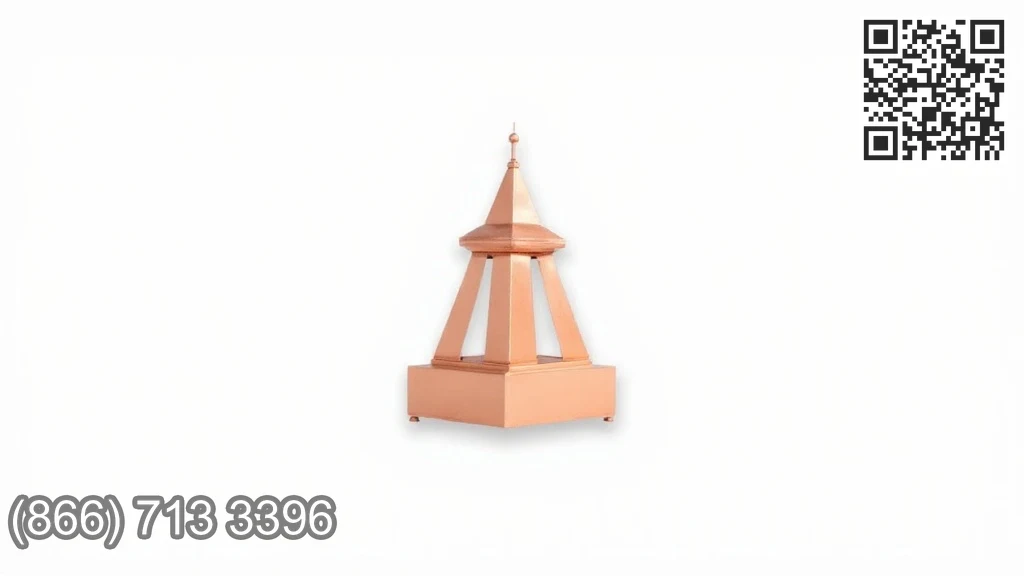
I spend a lot of my time on roofing systems and scaffolds, copper finials where you hear what a structure needs. The resemble of a hollow crown tells you it has begun to stress. The milky splash marks down a chimney face after a storm claim the top has actually been taking water. On older homes in seaside climates or snowy hill passages, these indications prevail. Custom-made manufactures, whether shadows, caps, a run of personalized snow guards, or friend items like personalized cupolas and custom roofing system vents, are not expensive ornament for ornament's purpose. They are efficiency get rid of aesthetic intelligence.
What a smokeshaft sustains, and why that matters
Wind drives rain at thirty or forty miles per hour across the top of a stack, and even a well-built crown can not shed every gust-driven droplet. Freeze-thaw cycles amplify every hairline fracture. In summer, warm swells the flue lining and crown, and by wintertime the tightening opens up a seam that wicks water. Once water gets in the smokeshaft body, it brings salts to the face. Efflorescence follows, after that spalling, after that a heartbreaking edge of brick that stands out and falls.
A cap or shadow interrupts that cycle. A great cap, effectively proportioned, projects much sufficient to cover the crown, stops direct rain access to the flue, and establishes a drip line that leaves the smokeshaft face dry. A shroud goes better, imitating a little roofing that envelops and visually finishes the top of the pile. In practice, it is the distinction between a fixing every 8 to 10 years and a pile that holds its lines for decades.
Shroud or cap, and when each belongs
Caps are marginal, typically a weathering plane with a spark arrestor display and, in wood-burning systems, a bird and insect guard. They safeguard the flue and crown without changing the character of the smokeshaft. On Georgian or Federal façades with crisp brickwork and a scribed sedimentary rock crown, a well scaled cap maintains the silhouette pure. You see it only if you look for it.
A shroud is more building. It can step, taper, or resemble the roof pitch. On Tudor, French Eclectic, or Mission Rebirth residences, a shadow lends the smokeshaft a finished, customized top. You can express it with seams, standing ribs, controlled finials, or louvered air flow. When made with taste, it feels original, not added.
The choice usually boils down to proportion and roof language. If your house checks out in slim, precise lines, a cap most likely suits. If the roof covering lugs sculptural kinds, if there are personalized dormers or a lanterned cupola, a shadow can join that discussion and look inevitable.
Materials that make their keep
Copper continues to be the gold criterion. It develops easily, solders right into watertight joints, and establishes a patina that flatters block and stone. On jobs within sight of saltwater, I typically define 20-ounce copper to withstand wind and coastal air. The very early months reveal raw heat, after that a gentle brown, then a surface that resolves towards verdigris in 5 to fifteen years depending upon exposure. When customers ask whether to compel a patina, I guide them to let the climate compose its honest tale. Pre-patinated copper is an alternative, yet it can look staged if the rest of the roof is fresh.
Zinc is a peaceful entertainer. It carries an all-natural graphite grey that harmonizes with slate and lead-coated copper gutters. It desires proper air flow behind it to prevent white rust where condensate may dwell, and it rewards specific describing, particularly at hemmed sides and clips. In alpine settings with hefty freeze-thaw and severe UV, titanium zinc holds its color and loses snow with less sound than steel with a slicker finish.
Painted light weight aluminum and steel ask different concerns. On contemporary builds or where shade control issues, a high-performance fluoropolymer surface can tie a cap or shroud to window cladding and fascia. You get a combination, and you shed some weight. You also accept that scrapes or reduce edges must be secured and checked, which long-term aging will be a matter of finishings, not metal chemistry. If the home leans historical, these contemporary layers need restraint to prevent a too-new luster. I have utilized them effectively on stuccoed Spanish Revival smokeshafts where a deep, matte umber aids the leading recede.
Stainless steel is the sensible workhorse for harsh commercial air or where timber stoves see strong. It does not age with love, however it resists creosote acids and thermal anxiety. Combed surfaces maintain glare down on sun-baked ridgelines. If you desire stainless to vanish, you can powder layer, but that action introduces an upkeep cycle.
Craft that checks out from the curb
A custom piece gives you control of darkness lines. A cap that overhangs by 2 and a fifty percent inches will certainly check out tentatively. At three and a half to four inches, the drip side casts a much more positive shadow and maintains the face drier. Screens need to be tight and discrete, not blown like a cord basket. Rivets, if utilized, must be lined up and constant. Firm seams ought to be right, clean, and neatly marinaded. A careless solder bead glints in the sun and betrays the hand.
When a shroud includes standing seams or ribs, I consider exactly how those lines will certainly register from the landscape. A set of joints can resemble a roof's seam spacing. 3 can really feel busy unless the chimney is large. Conical skirts can soften mass on a stout pile, and a mild lift at the corners produces a classy lightness that photographs perfectly at golden hour.
There is additionally the concern of discussion with various other roofing system accessories. Personalized finials on dormers or a weathervane atop custom-made cupolas, when restrained, can chat with a smokeshaft shroud's cresting or pinnacle. The guideline is simple, allow one piece be the speaker and the others the audiences. If the cupola lugs the show, maintain the shadow quiet. If the smokeshaft is your home's sculptural moment, allow the cupola take a breath and the dormers stay trim.
The composition of weatherproofing
The best metalwork stops working if the base information are reckless. A cap sits on legs, commonly four to 8, that secure into the crown or, better, into a shelf of new rock or cast concrete designed for the lots. Those legs need to be isolated from wetness paths. If they punch through a mortar joint, the joint must be cleaned up to appear material and repointed after installment. Where a cap or shroud fulfills stonework, I define a compressible, UV-stable gasket to restrict capillary action. Caulk alone is a false friend.
Flashing is the unsung hero. Where a shroud's skirt meets the pile, a reglet cut and a hemmed counterflashing make a resilient union, one you can service without tearing stonework. I rarely accept surface-applied blinking with screws and seam sealant on a fine home. You obtain an hour in labor and waste ten years of dignity.
Under the shroud, the crown must drain pipes. Too many crowns dead-level themselves into a superficial birdbath. A minor incline, also three-sixteenths inch per foot, relocates water. A drip kerf on the bottom of the crown keeps water from going back to the face. If the smokeshaft is huge, a very discreet weep under the shadow can aid pressure-equalize and dry out any type of water that strays in throughout a real sidewinder storm.
Sizing by proportion, not guesswork
Stand forty feet away and view the chimney versus the eaves and ridges. The cap or shroud have to come from that structure. As a rule of thumb, the forecast must at the very least meet the external edges of the crown plus an inch either side. Height complies with feature first. Provide the flue outlets enough clearance to air vent cleanly, specifically on high-efficiency gas units that create cooler, moisture-rich exhaust. After that give the eye a classy profile. A skirt that drops also much makes a chimney look heavy in the head. A reduced, level cap can really feel thrifty, like a hat borrowed from a smaller sized man.
I keep a set of cardboard layouts and telescoping poles in the truck. We'll mock the shape at full range, adjust up until the lines really feel right, and just then determine. That 10 mins conserves rework and budget.
Venting, displays, and the equilibrium of safety
Spark arrestors are not optional in wildfire-prone zones or for wood-burning fire places. The display aperture usually ranges around 3/8 inch, fine enough to quit ashes, open enough to prevent limiting draft. On coal or oil devices, testing can be an upkeep headache, as sulfur and residue weaved themselves into a floor covering. In those situations, a sheltered baffle might be much better than a firmly harmonized screen.
Bird guards shut out starlings, wasps, and the periodic raccoon. Make them functional. A guard secured completely to a cap comes to be a duty the first time a nest shows up. Pivoted or lift-off panels conserve hours.
High-efficiency gas home appliances air vent a cooler, damp plume. That plume condenses on chilly metal, and in winter season can produce icicles that pull displays out of square. Usage heat-resistant coatings, pitch the surfaces that can lug condensate so it recedes from the flue, and consider protected collars where steel fulfills the flue tile.
Working with historical fabric, respectfully
On older brick, the mortar might have as much character as the block. Lime-based mortars desire lime-based repair work. Cement mortars, usually utilized hastily in the seventies and eighties, are as well tough and can crush old brick as they restrain growth. Before mounting a new cap or shadow, I test mortar hardness with a pick collection. If the joints are fragile or sandy, I repoint to at least three-quarters inch deepness with a suitable mix.
Where chimneys have lost their crowns or are patched with tar, I eliminate the mess and cast an appropriate crown in forms, with fiber support and indispensable slope. On rock stacks, a custom-cut bluestone or granite cap reviews nobly. Once the substrate is sincere, the new metalwork can sing.
Patina matching is an art. When adding copper to a roof with existing copper rain gutters that have actually gone a deep brown with tips of environment-friendly, I'll prewash new copper with a mild acid and let it being in tidy rain for a couple of weeks before final mount. The objective is not a counterfeit age, just a mild running start so no solitary component shouts.
The instance for a collaborated roofing system package
One personalized piece on a roof accentuates what remains off-the-shelf. A cap could be ideal, yet if the dormers put on lightweight galvanized vents, the eye checks out a mismatch. On tasks where the roofline is important to the design, we prepare a coordinated steel package. Custom leader boxes that deal with the downspouts at the eaves, custom-made roof covering vents that blend into the field of slate, custom dormers that respect the rake and cheek angles of the major roofing system, also custom-made finials that crown the gables with a silent factor of pride. Each is tiny by itself. With each other, they make a house seem inevitable.
Salvo Metal Functions is one of the shops I transform to when the style asks for fine joint work, crisp soldering, and finishes that age with dignity. There are other excellent shops, and every area has its masters, however the principle holds, choose a fabricator that comprehends architecture, not simply metal.
Installation that does not telegram itself
An attractive cap can be undone by a crew that stamps muddy boots throughout a cedar roofing system. On high pitches, use cushioned crawl boards and ridge security. On slate or clay tile, distribute weight and action as if you are walking on eggs. I prefer to crane larger shrouds with soft slings instead of manhandle them up a ladder. Set the item on a protected hosting location, verify fit without sealants, then remove and prep the stonework get in touch with points.
Fasteners issue. Stainless screws right into lead guards, or nonferrous anchors, beat zinc-coated hardware every time. Where a leg meets a stone cap, bed it in a top-quality butyl tape and compress delicately, then lock with mechanical fasteners. Rely on compression and mechanical safety first, sealers second. If we require sealant, I pick one ranked for UV and suitable with both stonework and steel, applied in a cool, slim bead that can be reduced for future service.
Maintenance that seems like stewardship
The best indicator that an information is ideal is just how little attention it needs. Still, smokeshafts gain from a quick seasonal check.
- In late loss, confirm that screens are tidy, that bird guards turn or raise freely, and that any type of established screws haven't moved loose with thermal movement. After the very first spring tornado, search for from the lawn. Streaking down the smokeshaft face mean a fallen short drip edge. A dark, wet edge under a shadow recommends condensate pooling. Address little tells before they become repairs.
Beyond that, steel ages and tells a story. Allow copper darken and zinc soften. Clean only with clear water if tree sap or soot gathers. Withstand abrasives and aggressive chemicals that strip patina and short-circuit the product's all-natural protection.
Cost, value, and the lengthy view
A custom cap or shadow, fabricated in copper or zinc, usually drops in the series of a couple of thousand bucks for a moderate smokeshaft, to the low five figures for big or complex stacks. Include layout time, scaffolding or lift gear, and masonry job, and the plan might be a significant line on a project budget plan. The return is gauged in stayed clear of stonework reconstructs, cleaner draft, and the intangible lift of a roofline that looks tailored.
I have actually returned to tasks fifteen years on where a copper shadow I remember setting with a young pupil has gone the shade of stogie wrapper, and the block listed below it has remained tight and dry. Neighboring smokeshafts without protection betrayed action fractures and salt scars. It is difficult to argue with that said kind of evidence.
When the weather writes the spec
Not all climates are equal. On the Gulf Shore, storms transform loosened hardware into air-borne threats. That is where you define heavier gauge, bigger support flanges, and streamlined accounts that reject to catch wind. In high desert or mountain sun, UV trashes lower finishes, so pick completed with tried and tested fluoropolymer chemistry. In northern snow country, customized snow guards upstream of a chimney can avoid a sliding roof pack from hammering a cap level in March. And in high urban canyons, vortex winds can whistle at specific seam spacings, a problem solved by slight changes in rib frequency or hidden damping pads.
In wildfire corridors, cinder resistance comes to be critical. Limited displays and baffles, and a plan of seasonal sweeping, matter as much as product selection. I have actually retrofitted half a dozen smokeshafts in such areas in the previous 5 years, and the alleviation on customers' faces when the very first red-flag day comes deserves every minute on the ladder.
Coordination with mechanicals and codes
Before you design the prettiest shadow in the region, validate what is turning up via the pile. Mixed-use smokeshafts, with one flue serving a wood fire place and another offering a gas home appliance, need various clearances and testing. Some jurisdictions, especially where snow lots are high, need particular guard geometries to shed build-ups. A fast phone call to the building department and a read of the device manuals save revisions.
Gas device producers typically define minimum cross-sectional area and maximum backpressure at the terminal. Your shroud might be weatherproof and handsome, yet if it chokes the flue, the device will certainly fault. I keep a brief spreadsheet to inspect net totally free area of screens and baffles versus flue dimension. This is silent job, yet it keeps assessors nodding and customers safe.
When type discovers its kin throughout the roof
A chimney cap can be a one-off, or it can be the beginning note for a chorus across the roofing system. On a waterside Tile Design home we completed last year, the chimney shadows, personalized leader boxes, and a collection of low-profile custom roof covering vents shared a language, a soft-shouldered copper joint with a delicate hemmed lip. The dormers, rebuilt as custom-made dormers with proper cheek blinking and a hint of copper eyebrow over their windows, provided the front elevation a confident smile. We topped the major ridge with a set of restrained customized finials that hardly catch the eye, a glint at sunset. The whole ensemble came out of one dialogue with the producer, Salvo Metal Works. The house checks out calm even in a gale, and every piece looks born there.
The silent luxury of doing it right
Luxury on a roof covering is not loud. It is a crisp reglet, a joint that goes away, an aging that grows, and an account that makes the skies appear willful. Customized smokeshaft shadows and caps serve function first, but they also sign the designer's and contractor's names in an area only birds usually notice. When you stand back on the grass, or glide up the drive and see the house resolve into itself, that sense of composure is difficult to fake.
If you are restoring a historic pile or elevating a new develop, insist on proper percentage, honest products, and craft that can stand a close appearance. Coordinate the chimney with the remainder of the roof's metalwork, from cupolas to vents to snow guards, so every aspect maintains the weather out and the lines clean. After that provide the roofing system a season or more to speak back. Great always seems better with time.